
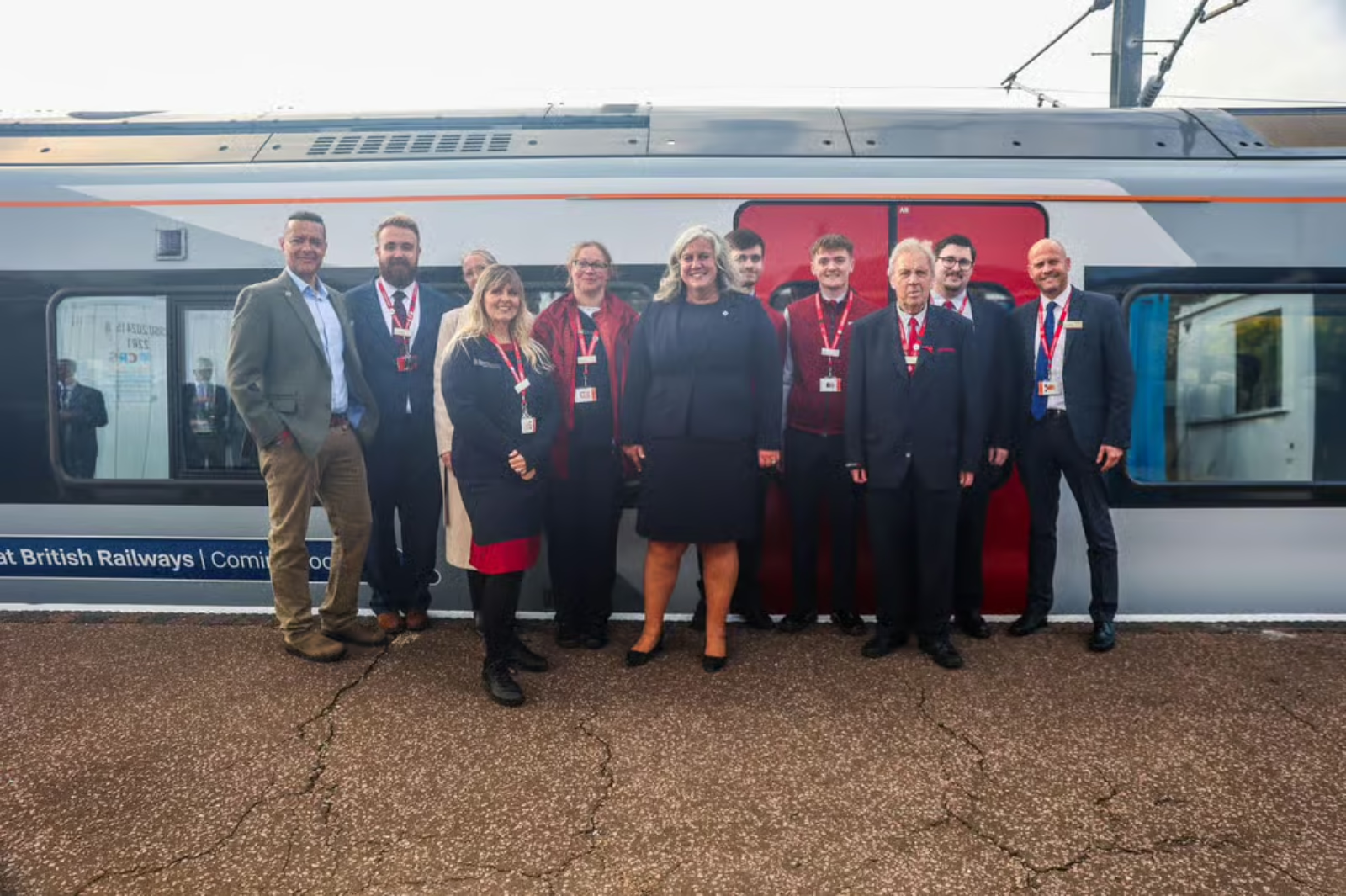
This week marks a major change for rail passengers across the East of England, as Greater Anglia’s services move into public ownership. The company operates on the route connecting Peterborough, Ely, Ipswich and Colchester – a line many local commuters and families rely on day-to-day.
The transfer means that nearly half of all train journeys in Britain are now run by publicly owned operators. It’s a significant milestone in the Labour government’s plan to simplify the rail network, improve reliability, and put passengers at the centre of how services are run.
For years, rail users have been let down by delays, cancellations, and a ticketing system that too often feels confusing and unfair. The shift to public ownership is about creating a railway that people can depend on – one that’s accountable, efficient, and focused on long-term value rather than short-term profit.
LNER, a publicly owned provider, offer a strong example of what’s possible under public control. A recent survey by Transport Focus showed LNER achieving 94% overall journey satisfaction – the highest across train operating companies in Great Britain. Under nationalisation, that kind of performance can become more common.It means that the expertise of its workforce can be shared across the wider network, setting a higher standard for other services and helping to shape the unified system that Great British Railways will lead in the years ahead. For passengers in and around our region, it matters that this is done properly. Rail isn’t just about getting to work or visiting family – it underpins our local economy.
Reliable connections between Peterborough, Ely and the rest of the eastern region open up opportunities for jobs, training, and investment. They make it easier for businesses to grow, for students to access education, and for visitors to come and spend time in our city.
Public ownership won’t solve every issue overnight, but it does mark a clear change in direction. It’s about accountability and public service being put back at the heart of transport. When things go wrong, responsibility is clear. When improvements are made, the benefits are shared.
The new system will also make it easier to coordinate investment in stations, tracks, and ticketing, so that passengers experience one joined-up network rather than a patchwork of private operators. And with new stations opening in the wider region and modern rolling stock already in place, there’s a real chance to build a railway that works for today and the future.
Like so many areas of public life, this is about rebuilding systems that work for people, not against them. We all want a transport system that’s reliable, affordable, and sustainable -one that reflects the importance of the regions it serves.
As these changes take shape, I’ll keep making the case for Peterborough and the surrounding area to be fully included in that investment. Reliable rail links are essential to our growth and quality of life, and it’s right that the Labour government is taking action to get this right for the long term.